Employee Catering: The Complete Guide for Companies in Austria
Today, employers in Austria who want to attract qualified employees and retain them long-term need more than just an attractive salary. To boost satisfaction, productivity, and corporate culture, workplace catering now plays a significant role.
This is already supported by Austrian tax law: Under certain conditions, employers can provide tax-free meal allowances. This makes employee catering more than just a benefit; it becomes an economically sensible tool for salary structuring.
This guide provides a structured overview of all essential aspects of corporate catering in Austria – from available solution models and tax frameworks to modern alternatives and the traditional company canteen.
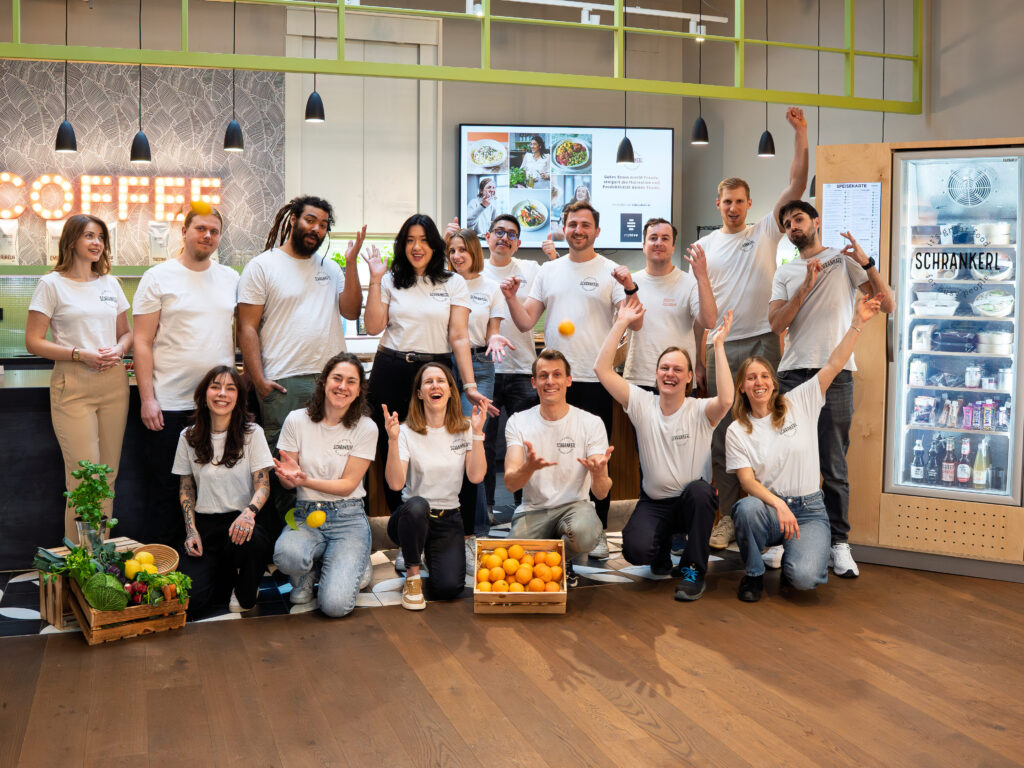
As a Digital Marketing Working Student, she ensures that Schrankerl is a delight online as well. With fresh ideas, great commitment, and a digital flair, she brings creativity and energy to the team — and to every screen! 💚
The Most Important Facts About Employee Catering at a Glance:
- Employee catering demonstrably increases satisfaction, productivity, and employee retention.
- In Austria, meal allowances can be granted tax- and social security-free under certain conditions.
- There are six common catering models: canteens, meal vouchers, delivery services, smart fridges, office kitchens, and catering.
- Modern solutions like smart fridges enable even SMEs to provide flexible and cost-efficient catering without infrastructure investment.
- Good office catering is now a relevant factor in employer branding and the war for talent.
Why Employee Catering Is More Important Than Ever Today
In times of skilled labor shortages, employee benefits, especially in addition to salary, are crucial when choosing an employer. According to surveys, daily workplace catering is one of the strongest benefits in Austria.
Employee Satisfaction and Well-being
A balanced lunch directly impacts physical and mental well-being. Employees who are well-nourished during their break return to their workstations refreshed. Studies from German-speaking countries confirm that corporate catering options significantly increase employee satisfaction – regardless of company size or industry.
Productivity and Concentration
The connection between nutrition and cognitive performance is well-documented. Those who eat hastily and inadequately at lunch, or don’t take a break at all, are less focused in the afternoon. A structured catering solution within the company actively encourages the use of breaks and thus contributes to the workforce’s performance.
Employer Attractiveness in the War for Talent
According to current HR studies, daily meal benefits – including subsidized meals or meal allowances – are among the most frequently requested additional services. For companies that want to compete for talent, a clear answer to the question “What do you offer for lunch?” is almost mandatory today.
Employee Retention and Turnover
High employee turnover causes significant costs: recruiting, onboarding, and loss of know-how quickly add up to several times an annual salary. Companies that offer employees genuine added value – including in terms of catering – strengthen emotional ties to the company and reduce the likelihood of departure.
Sick Leave and Corporate Health Promotion
A healthy, balanced diet reduces the risk of illness and supports corporate health promotion. Companies that focus on healthy employee catering also invest in the long-term health of their workforce and can potentially reduce sick leave.
What Types of Employee Catering Are There?
There is no universal catering model that fits every company. The choice depends on company size, budget, location, and the needs of the workforce. Here’s an overview of the most common solutions:
Company Canteen
The traditional company canteen offers freshly prepared meals on-site daily. It is currently the most common and well-known type of employee catering – and also the most complex solution.
Advantages: High quality and control over the food selection; social meeting point for the workforce; strong presence in employer branding.
Disadvantages: High investment and operating costs; economically viable only for a minimum of approx. 100–200 employees; fixed opening hours.
Costs: Setup from approx. €100,000 upwards; ongoing personnel costs for kitchen staff. Generally not economically feasible for SMEs.
Scalability: Limited – capacities are structurally restricted.
Meal Vouchers
Meal vouchers (also called meal tickets or restaurant vouchers) are issued by the employer and can be redeemed at participating restaurants or grocery stores. In Austria, they are tax- and social security-free under certain conditions (more on this in the Tax Advantages section).
Advantages: No infrastructure investment; flexible use by employees; tax advantages for both sides; also suitable for decentralized teams.
Disadvantages: No direct control over food quality; acceptance points vary by location; administrative management required.
Costs: Depending on voucher value and number of employees; typically €4–8 per workday per person.
Scalability: Very good – works regardless of company size and location.
Delivery Services and Lunch Delivery
Some companies organize daily or weekly deliveries from external catering businesses or specialized catering providers to the office.
Advantages: No kitchen setup necessary; flexible menu selection; can be implemented at short notice.
Disadvantages: Quality and punctuality of delivery highly dependent on the provider; temperature fluctuations of food; not very sustainable (packaging waste); difficult for employees to plan.
Costs: Variable; typically €7–15 per meal including delivery.
Scalability: Medium – complex to coordinate for regular deliveries to larger teams.
Smart Fridges (Intelligent Refrigerators)
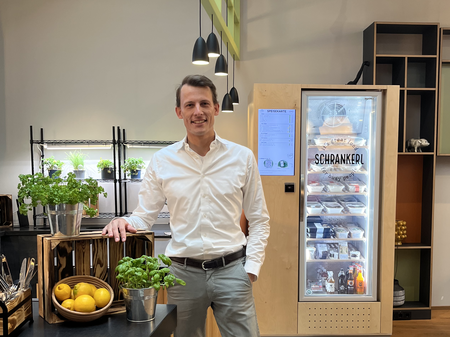
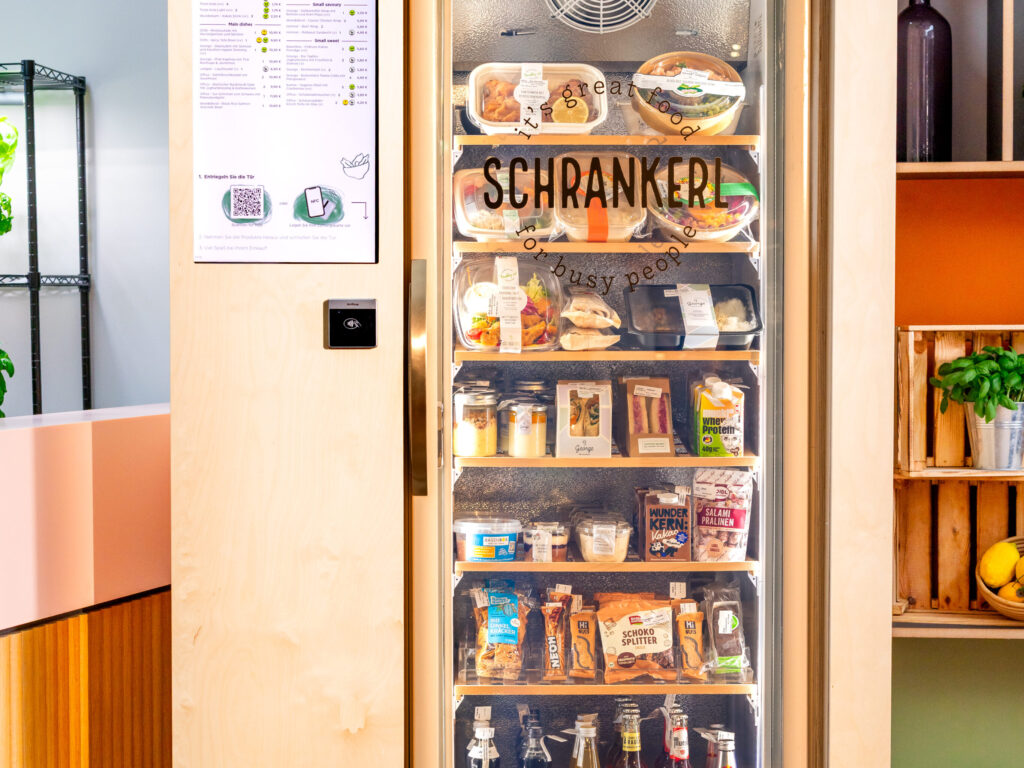
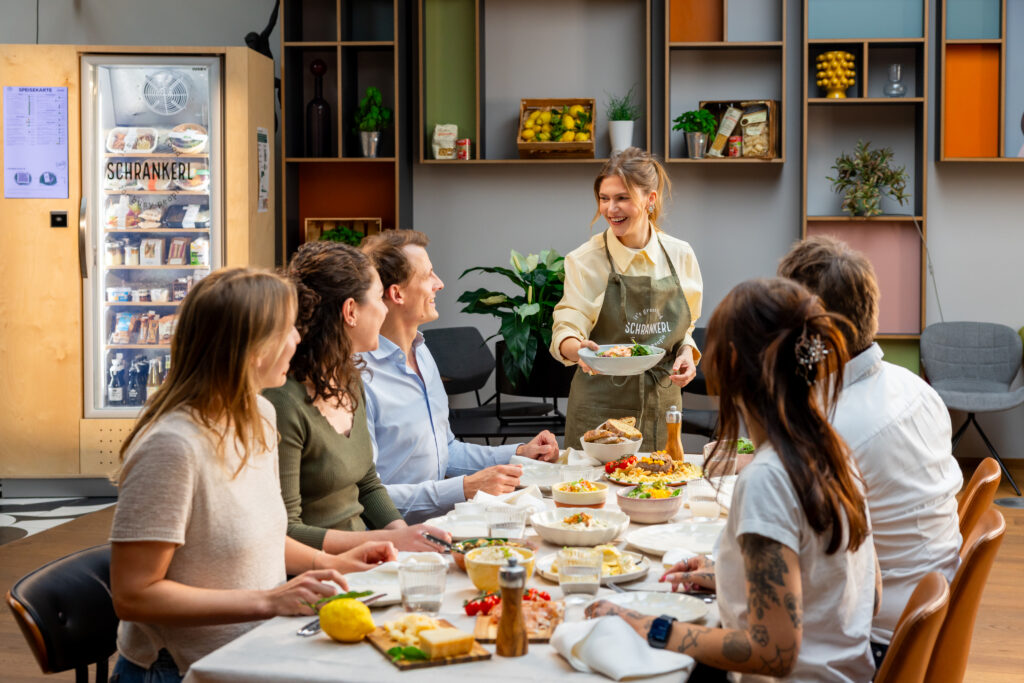
Smart Fridges are networked, automated refrigerators filled with freshly prepared meals, providing employees with 24/7 access to food. Billing is automated, and employers can set up subsidies directly in the system.
Advantages: 24/7 availability; no kitchen staff needed; fresh, daily changing meals; flexible subsidization options; low space requirement; low food waste due to demand-driven refilling.
Disadvantages: Dependent on the provider’s refilling logistics; not suitable for complete kitchen replacement for very large teams.
Costs: Usually no investment costs for the device itself; billing per meal; monthly service fees depending on the provider.
Scalability: Good – economically attractive even for SMEs with 30+ employees.
Office Kitchens and Self-Service
A well-equipped office kitchen with a refrigerator, microwave, coffee machine, and snack offerings is a low-threshold entry-level solution. Companies often combine this with delivery services or snack boxes.
Advantages: Low fixed costs; easily scalable; promotes internal interaction.
Disadvantages: Employees must provide for themselves; no hot lunch guaranteed; hygiene obligations for the employer.
Costs: From a few hundred euros monthly for snacks and basic equipment.
Scalability: Good as basic infrastructure; limited as a sole catering solution.
Catering Solutions
With corporate catering, an external service provider regularly comes to the company and prepares meals – either daily or on specific weekdays.
Advantages: Fresh preparation; high quality possible; no in-house kitchen infrastructure necessary.
Disadvantages: Dependent on caterer availability; less flexible; fixed costs due to contract models.
Costs: Depending on scope and provider; typically €8–20 per person per day.
Scalability: Medium – good for events or fixed weekdays; less so for daily full provision.
Tax Advantages of Employee Catering in Austria
Briefly explained: In Austria, employers can provide employees with tax-free meals or meal allowances under certain conditions. This area is subject to detailed legal regulations; the following information is for general guidance only and does not replace individual tax or social security advice.
Free or Subsidized Meals at the Workplace
If the employer provides meals directly at the workplace – for example, via a canteen, a smart fridge, or a catering service – these are not considered a taxable non-cash benefit under certain conditions. It is crucial that the meal is not compensated in monetary value, i.e., not paid out as cash or an equivalent voucher.
Meal Vouchers and Tax-Free Allowances
For meal vouchers in Austria, there is an annually adjusted tax-free maximum amount per workday (as of 2026: €8 per day per employee). Vouchers redeemable at specific restaurants or grocery stores can be granted – within this framework – free of wage tax and social security contributions. For exact current amounts, it is recommended to consult a tax advisor or the website of the Austrian Federal Economic Chamber.
Advantages for Employers
- No ancillary wage costs for tax-free non-cash benefits (within legal limits)
- Business expense deduction generally possible for canteen and catering costs
- Employee catering as an attractive, cost-efficient benefit in the compensation package
Advantages for Employees
- Tax-free non-cash benefit increases the net value of the overall package
- No social security deductions on tax-free meals
- Effective increase in purchasing power without income tax burden
Note: Tax law changes. We recommend always clarifying current amounts and conditions with a tax advisor or directly with the WKO. The information presented here is general in nature and not legally binding.
Employee Catering as a Success Factor for Employer Branding
The Austrian labor market is tight. In many industries – from IT to skilled trades to healthcare professions – the demand for skilled workers significantly exceeds the supply. In this environment, salary alone is no longer the sole deciding factor; the overall package matters. Employee catering as a benefit is significant here.
Positioning as an Attractive Employer
Employee catering is a concrete, daily experienced benefit. Unlike abstract additional services, a good lunch break is visible, tangible, and communicable – both internally and externally. Companies that offer high-quality catering can actively use this in job advertisements, on career pages, and during job interviews.
Corporate Culture and Social Cohesion
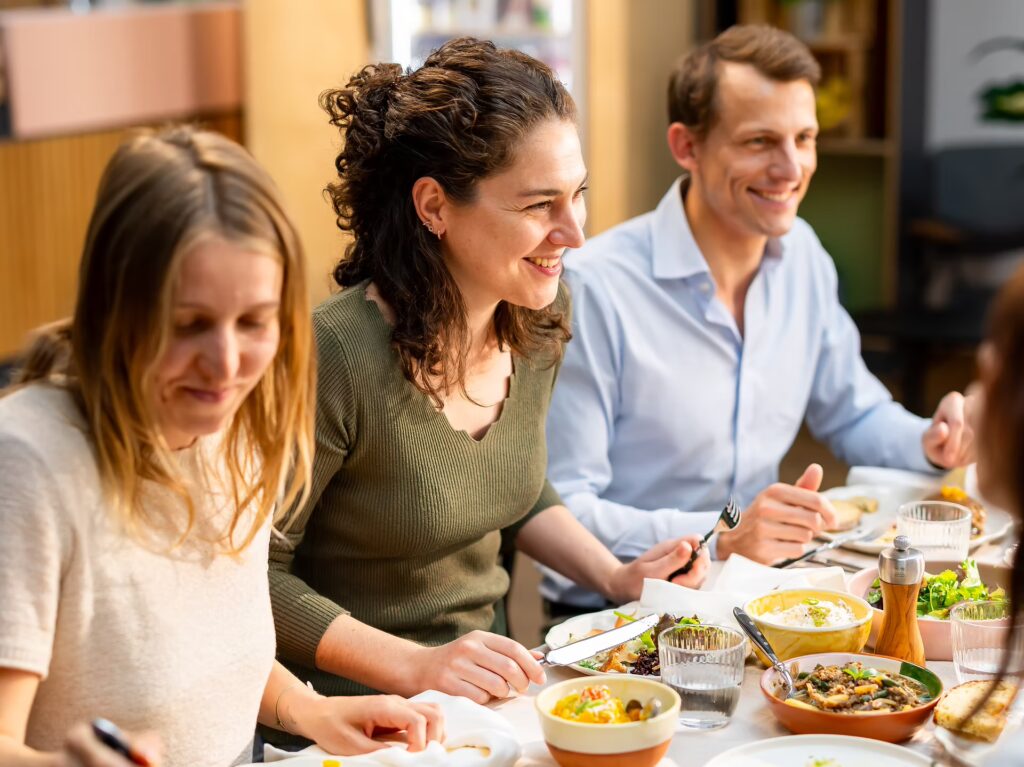
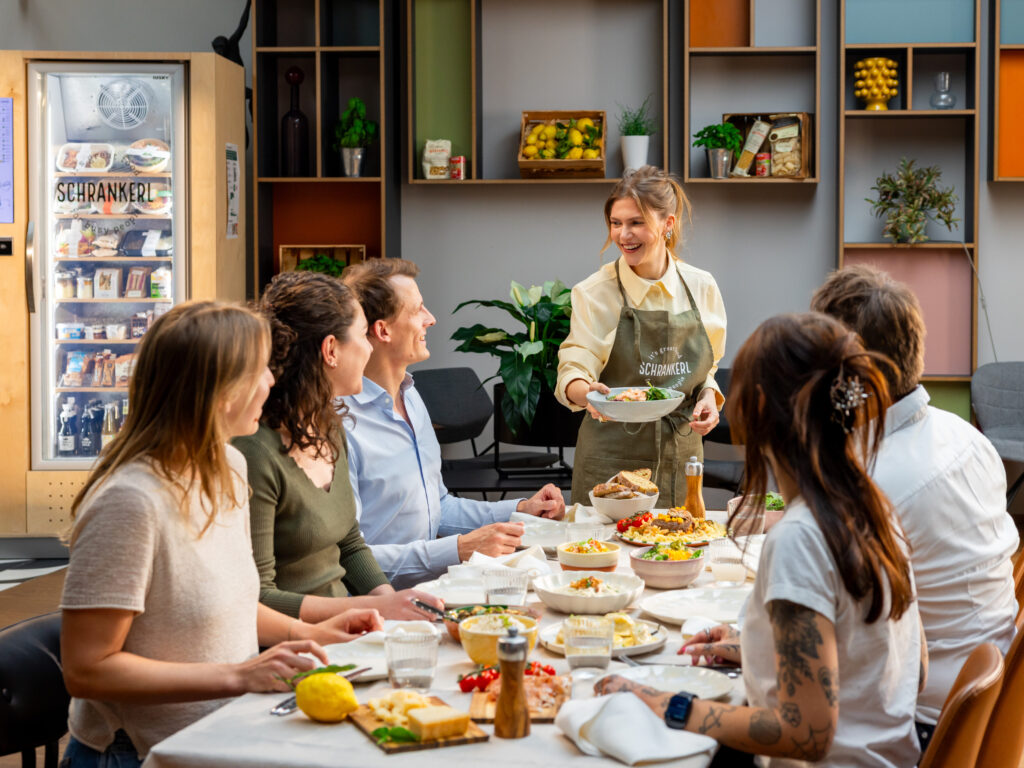
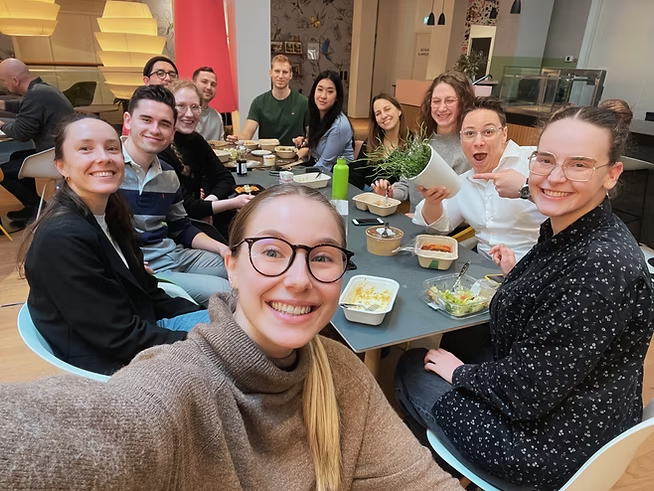
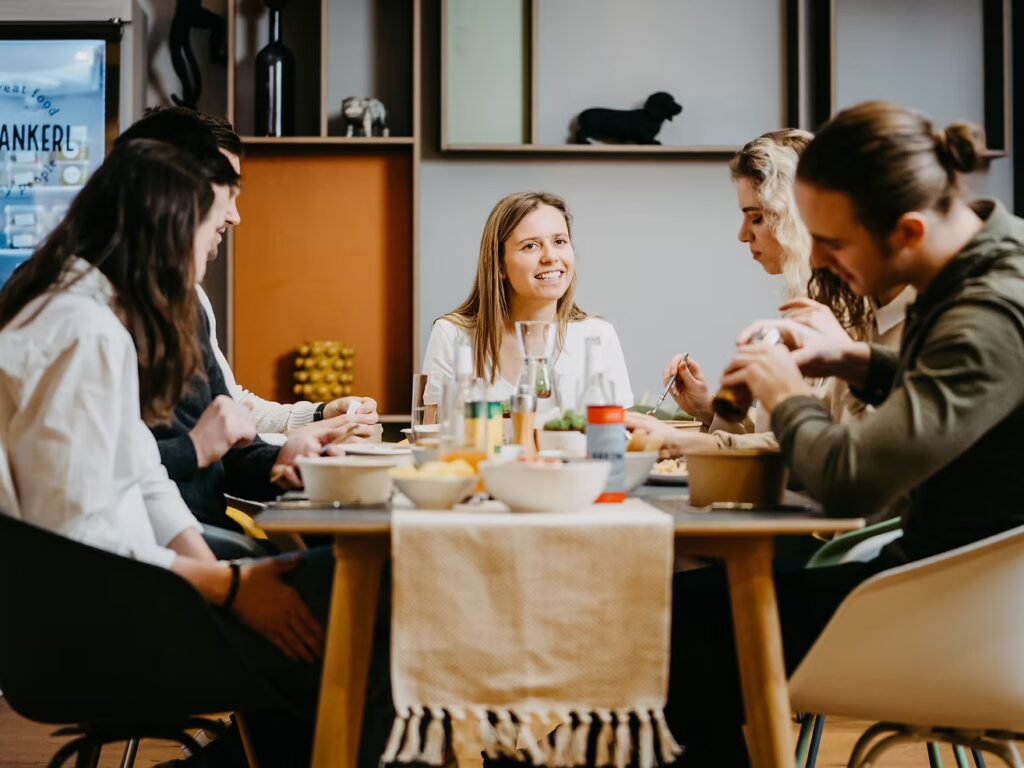
The shared lunch break has a cultural value that is often underestimated. Where colleagues eat together, informal conversations arise, departmental boundaries become more permeable, and the sense of community grows. A well-designed break infrastructure is therefore also an investment in corporate culture.
👉🏼 Learn more in our blog on corporate culture
Retention: Why Catering Keeps Employees
Studies show that employees who feel valued stay with the company longer. A tangible benefit like a daily lunch or a generous meal allowance sends a clear signal: the company invests in the well-being of its people. This emotional bond is an effective retention factor – especially in a world where job offers arrive via LinkedIn messages.
Employer Branding in External Perception
Platforms like kununu or LinkedIn reviews make corporate culture visible to outsiders. Employees who report positively about lunch, the canteen, or the snack fridge actively contribute to the employer brand.
Modern Employee Catering Without a Canteen
Not every company can or wants to operate its own canteen. The good news is that today, none are needed to offer employees fresh, high-quality meals daily. Innovative concepts like Smart Fridges close this gap. They are flexible and can be used without infrastructure investment.
The Smart Fridge Concept Using Schrankerl as an Example
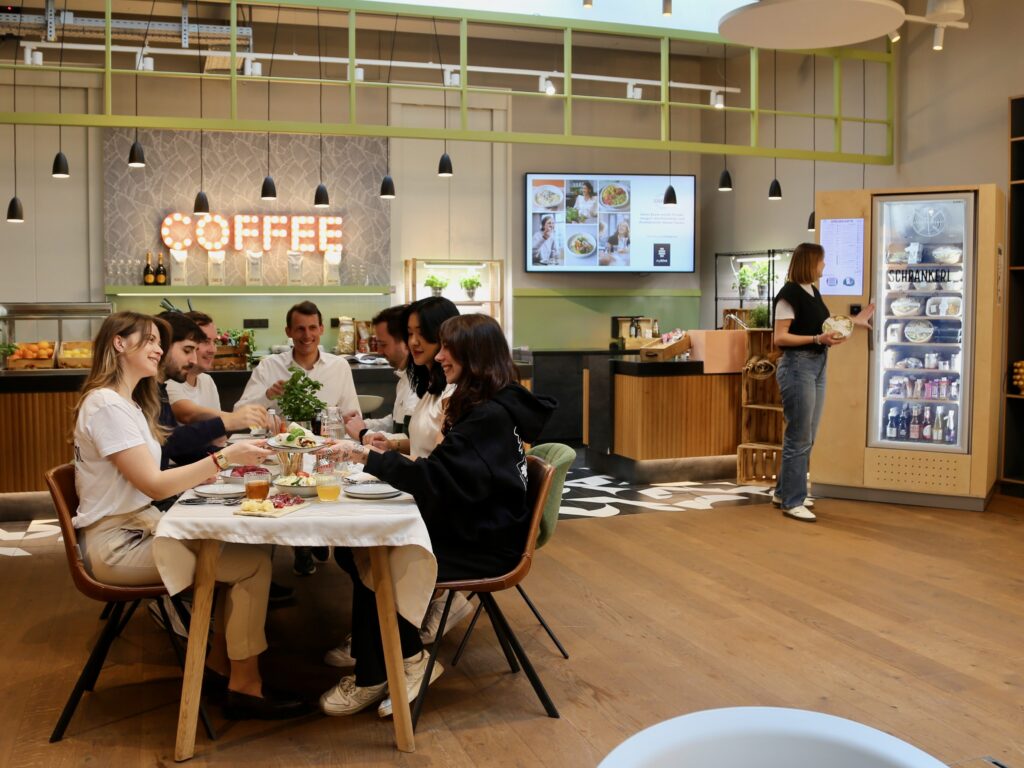
Schrankerl is an Austrian provider of intelligent refrigerator solutions for companies. The concept is remarkably simple: a networked refrigerator is filled daily with freshly prepared and regional dishes. Employees can access it around the clock, pay via app or card, and the employer can set up subsidies directly in the system.
Fresh Meals Refilled Daily
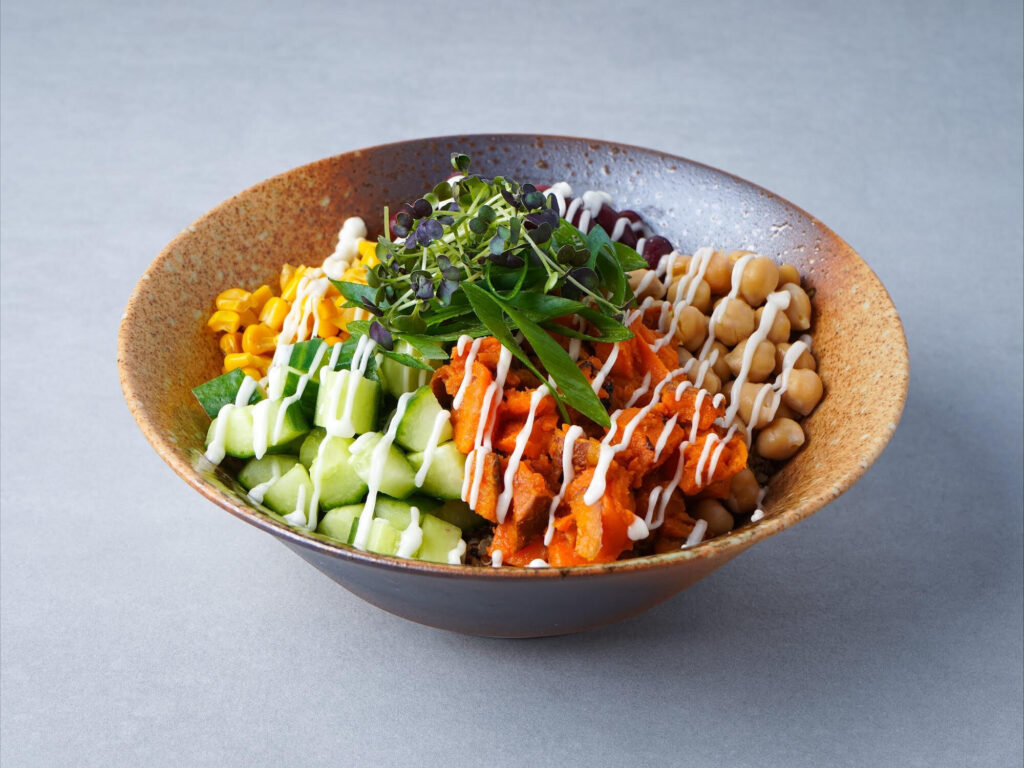
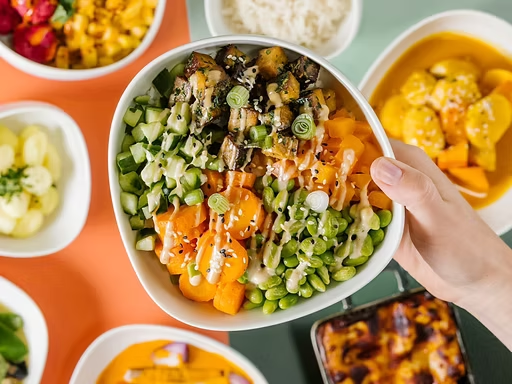
Meals are freshly prepared and delivered daily. There are no reheated convenience products, but real meals – from hot dishes to salads and snacks. The selection rotates, so even frequent users have variety every day.
Flexible Use for All Work Models
Smart Fridges are ideal for hybrid work environments: employees who are not in the office daily can use the offering when they are on-site – without meals expiring or orders needing coordination.
Sustainability and Food Waste Reduction
A significant advantage over traditional catering solutions: refilling is demand-driven based on consumption data. Surpluses are minimized, packaging is reduced, and the CO₂ footprint of catering decreases.
24/7 Availability
Unlike a canteen, a Smart Fridge is accessible around the clock. This is particularly relevant for companies with shift work, early starts, or late meetings – and for anyone who wants to plan their lunch break flexibly.
No Personnel Costs, No Infrastructure Investment
Operating a Smart Fridge requires no dedicated kitchen staff, no structural modifications, and no minimum purchase plan. Providers like Schrankerl handle delivery, refilling, and technical service.
👉🏼 Discover more about the Schrankerl solution for businesses
Summary
Employee catering is far more than just a canteen or a meal voucher. It is a strategic HR instrument that simultaneously influences productivity, well-being, corporate culture, and employer attractiveness. Austrian companies benefit from an attractive tax framework that allows meal allowances to be wage tax- and social security-free under certain conditions.
While traditional company canteens are not economically viable for many SMEs, modern alternatives like Smart Fridges, meal vouchers, and catering solutions offer flexible, scalable, and cost-efficient ways to provide professional office catering.
Investing in employee catering today means investing in productivity, retention, and your own employer branding.
Frequently Asked Questions About Employee Catering (FAQ)
Yes, under certain conditions. Meals provided directly at the workplace are generally not considered a taxable benefit in kind. Meal vouchers can be granted tax-free for wage tax and social security contributions up to a legally defined daily maximum amount, which will be up to €8.00 per working day in 2026. Since the exact amounts and conditions can change regularly, individual consultation with a tax advisor or a review of the current information from the WKO is recommended.
For small and medium-sized enterprises (typically up to 100–150 employees), meal vouchers and smart fridge solutions are the most suitable. Both models require no dedicated kitchen infrastructure, are flexibly scalable, and can be designed to provide tax advantages. A smart fridge becomes economically viable starting at approximately 30 employees.
This depends heavily on the chosen model. Meal vouchers typically cost 4–8 € per workday, which amounts to 80–160 € monthly per person. Smart fridge meals usually range between 5 and 10 € per portion. With tax optimization, the effective costs for the employer are significantly reduced, as ancillary wage costs are eliminated.
The most important alternatives to a classic company cafeteria are: meal vouchers (e.g., Edenred), smart fridges (e.g., Schrankerl), external catering, delivery services, and well-equipped office kitchens. The best solution depends on team size, location, budget, and the eating habits of the workforce. In many cases, a combination of a smart fridge and a meal allowance is chosen.
Daily, tangible benefits, such as a subsidized lunch, increase appreciation for the employer. They create positive daily experiences, encourage the use of breaks, and strengthen social cohesion within the team. Employees who feel well-cared for and valued are less inclined to leave, which, in turn, reduces turnover and recruiting costs.
Yes. Meal vouchers are excellent for remote employees, as they can be redeemed regardless of location. Smart fridges in the office complement the offering for everyone who is regularly on-site. A combination of both models covers hybrid work situations effectively.
Sustainability is gaining importance for employees and companies alike. Solutions that reduce food waste, collaborate with regional producers, and focus on minimizing packaging are becoming increasingly relevant. Smart fridge concepts like Schrankerl offer structural advantages in this regard through demand-driven stocking and optimized delivery logistics.
As a Digital Marketing Working Student, she ensures that Schrankerl is a delight online as well. With fresh ideas, great commitment, and a digital flair, she brings creativity and energy to the team — and to every screen! 💚
More Articles
Today, employers in Austria who want to attract qualified employees and retain them long-term need more than just an attractive salary. To boost satisfaction, productivity, and corporate culture, workplace catering now plays a significant role.
This is already supported by Austrian tax law: Under certain conditions, employers can provide tax-free meal allowances. This makes employee catering more than just a benefit; it becomes an economically sensible tool for salary structuring.
This guide provides a structured overview of all essential aspects of corporate catering in Austria – from available solution models and tax frameworks to modern alternatives and the traditional company canteen.