Strengthening Company Culture: 7 Measures Austrian Companies Can Implement Today

As a Junior Marketing and Event Manager, she ensures that every lunch break at Schrankerl is a delightful experience. With fresh ideas, strong commitment, and organizational talent, she brings creativity and energy to the team—and, of course, to every plate! 💚
What is Company Culture – and Why It Determines Business Success
Company culture — often also referred to as corporate culture or organizational culture — is a system of shared values, beliefs, behaviors, and unwritten rules that the company represents internally and externally. It shows how employees interact with each other and how decisions are made. It reveals what happens when no one is watching: How does a manager react to a mistake? Are ideas from the team taken seriously? Is there room for spontaneous exchange, or is there an awkward silence in the hallways?
With a strong company culture, employees are proud of their work and more motivated. They feel understood and integrated, and the leadership style is transparent.
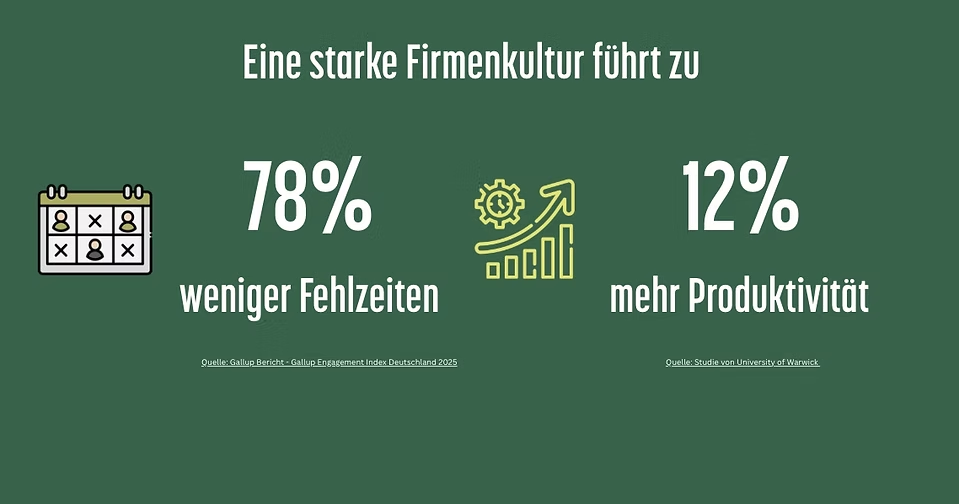
The numbers speak for themselves: companies with a great and strong corporate culture achieve better economic and social values.
Company culture is part of the corporate strategy. It can demonstrably lead to improvements within and from the company. Corporate culture begins with concrete, everyday decisions.
The 5 Core Elements of a Strong Company Culture
A strong corporate culture consists of the targeted interaction of various elements
Trust and Credibility of Leadership
If there is a basis of trust between employees and supervisors, engagement, willingness to take risks, and innovation increase. Trustworthy leaders distinguish themselves through transparent communication, reliability, and genuine interest in their employees. Leadership is the most significant lever for company culture.
Respect, Fairness, and Psychological Safety in the Company
To give employees a sense of psychological safety, they should be allowed to contribute freely and make mistakes. Furthermore, they must be treated respectfully, regardless of position, gender, or origin. This leads to a significant increase in innovation and productivity.
Shared Values and Lived Purpose
People want to be part of something and feel included. For this to happen, the described values and mission of a company must be tangibly lived.
Recognition and Appreciation within the Company
Regular recognition — whether in a team meeting, via a personal message, or through benefits — shows employees that their work is acknowledged and valued.
Rituals and Tangible Symbols for a Shared Culture
To convey a sense of belonging, rituals should be integrated into daily work life. This could be a shared lunch, a short sports break, or a Friday wrap-up. This not only allows for time together and exchange but also builds genuine trust.
Canteen vs. Schrankerl – What Suits Your Company Culture?
Comparison on Schrankerl.at
7 Concrete Measures to Strengthen Your Company Culture
Theory is good — practice is better. Here are seven measures that Austrian companies can implement immediately, cost-consciously, and with measurable impact:
Measure 1: Establish a Regular, Honest Feedback Culture
Instead of a single annual employee review, continuous, low-threshold feedback, such as short anonymous surveys or weekly check-ins after completing tasks or projects, should be integrated into daily office life. An open feedback culture, where leaders actively ask for and respond to feedback, builds trust. To demonstrate the effects of regular feedback, it should be made visible what specific changes have resulted from the feedback.
Measure 2: Translate Values from the Mission Statement into Everyday Life
Values such as “respect,” “innovation,” and “team spirit” often remain abstract and thus ineffective — they need concrete behavioral examples that are visible in everyday life. For this, the following questions, for example, should be answered: What does respect specifically mean in your company? What does a respectful meeting look like? Define two to three behaviors per value and make them the standard for leadership and collaboration. To implement this even more effectively, employees must be involved in finding and defining these values. Behaviors developed collaboratively are lived much more strongly than those dictated from above.
Measure 3: Design Onboarding as a Cultural Experience
Starting at a new company is crucial not only for professional training but also for the initial cultural impression. In the first few weeks, new employees experience whether communicated values are lived reality — or just nice words. Invest in structured onboarding, explicit cultural transmission, and buddy programs. The latter, in particular, is important, as experienced employees serve as informal contacts for new colleagues, providing unfiltered insights into the company culture.
Measure 4: Develop Leaders as Cultural Ambassadors
Company culture is a top management priority — but it lives or dies at the team level. Leaders are the multipliers: their behavior, communication style, and handling of mistakes are the direct embodiment of company culture for employees. To successfully convey this, investment should be made in leadership development that explicitly addresses cultural aspects. Coaching, peer-learning formats, and open exchange about leadership issues strengthen skills such as empathetic communication and situational leadership.
Measure 5: Tangible Employee Benefits that Signal Appreciation
In addition to lived values, company culture also needs concrete employee benefits such as high-quality employee catering in the office, flexible working hours, or further education budgets. This communicates employer support and underscores interest in employees’ personal and professional development. Well-chosen benefits also create shared experiences that foster informal exchange and strengthen cohesion. For example, those who eat lunch together from Schrankerl also build the informal relationships that make a difference in official collaboration.
Measure 6: Create and Protect Community Rituals
Shared lunch breaks, team lunches, internal all-hands meetings, informal Friday get-togethers are rituals that create belonging and connection. They don’t have to be elaborate or expensive, but they must take place regularly and be protected. Even a regular shared lunch — made possible by fresh office catering directly in the company — can become a fixed cultural institution. Many Schrankerl customers report that internal traditions have formed around the daily break, visibly strengthening team cohesion.
Measure 7: Measure and Transparently Communicate Culture Metrics
eNPS (Employee Net Promoter Score), fluctuation rates, and engagement scores are culture KPIs that should be used to measure current well-being and, if necessary, plan improvements. These must be communicated transparently to the team, as this clearly communicates what has already been optimized and what will still change.
Why Shared Meals Are an Underestimated Element of Company Culture
Hardly any measure to strengthen company culture is as consistently underestimated as shared meals. Yet, food is one of humanity’s oldest and most universal social rituals — and companies that understand this have a huge advantage.
“With Schrankerl in our office, we have a large selection of lunch, breakfast, and snacks. Building internal traditions of ‘Schrankerl o’clock’ contributes greatly to team dynamics through regular exchange during lunch.”
What happens when people eat together? They exchange ideas — beyond project tickets and Slack channels. They get to know each other as people. They build informal relationships that sustainably improve formal collaboration.
The problem with many offices: The lunch break becomes a solo activity. Those who go into the city are gone for 45 minutes. Those who bring something sit alone at their desks. Those who go to a bad canteen are demotivated — before the afternoon even begins.
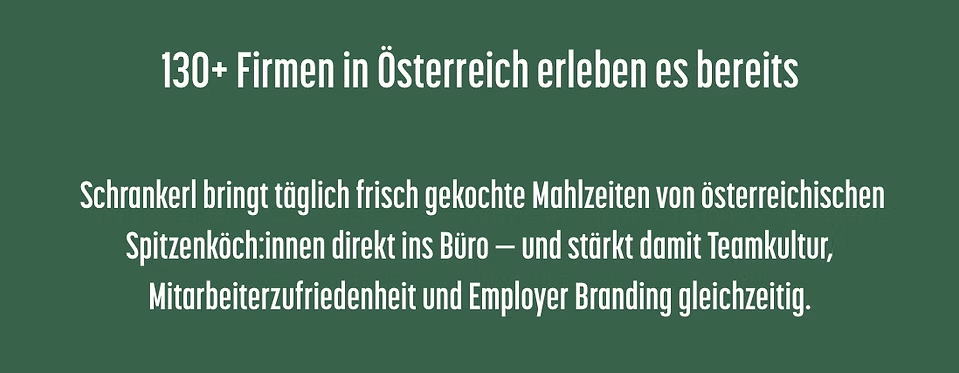
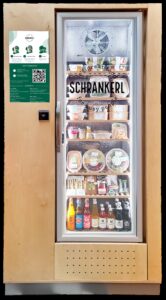
Schrankerl solves exactly this problem: freshly prepared meals daily from over 18 regional Austrian food partners — directly in the office, without pre-ordering, available around the clock. No renovation, no canteen infrastructure, no personnel costs. Just a power outlet — and a team that eats together again.
Companies like Peek & Cloppenburg, EY, Der Standard, Tractive, and Tchibo/Eduscho already rely on Schrankerl — not just as a catering solution, but as a conscious contribution to their company culture.
About Schrankerl
Flexible Employee Benefit, Regional Chefs, Sustainable Mission
Company Culture and Tax Savings: The Smart Dual Benefit
Good company culture costs money — or does it? In Austria, tax law offers an opportunity that many companies still underutilize.
Employee catering directly within the company in Austria is not subject to any monetary limit. Employers can cover 100% of the costs for high-quality office catering — like Schrankerl — without creating a taxable benefit for employees.
Specifically, this means: If employees currently spend €10 daily from their net salary on lunch, it costs the employer around €22 including ancillary wage costs. Through Schrankerl, up to €12 per employee per day can be saved. For 50 people, that’s over €12,000 monthly. This is money that can flow directly into other cultural measures.
Additionally, Schrankerl can be combined with meal vouchers such as Pluxee and Edenred cards.
All tax details can be found in the Schrankerl FAQ and in the blog on tax-free employee meal allowances in Austria 2026.
Frequently Asked Questions
Company culture — often referred to as corporate culture or organizational culture — is a system of shared values, beliefs, behaviors, and unwritten rules that the company represents both internally and externally. It demonstrates how employees interact with one another and how decisions are made. With a strong company culture, employees are proud of their work and are more motivated. They feel understood and integrated, and the leadership style is transparent.
To strengthen corporate culture, elements such as clear values communication, leadership development, genuine and transparent appreciation, meaningful rituals like shared lunch breaks, flexible work models, feedback culture, and material benefits like high-quality employee catering directly in the office should be available.
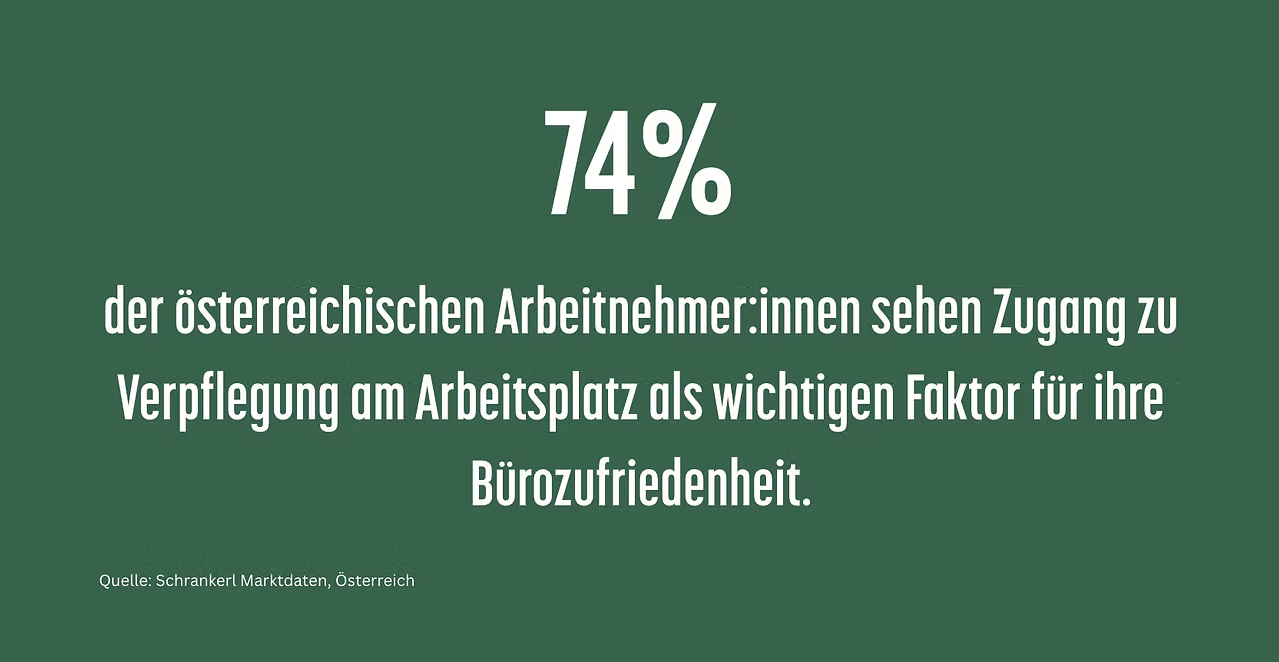
74% of Austrian employees report being more satisfied in the long term thanks to workplace catering. A communal lunch fosters informal exchange among employees and thus builds trust. According to a University of Warwick study, satisfied employees are 12% more productive, which directly contributes to the company’s economic and cultural goals.
Yes! In Austria, employee catering provided directly at the company is not subject to any monetary limit. Employers can cover 100% of the costs for high-quality office catering — like Schrankerl — without creating a taxable benefit for employees.
A strong corporate culture is created through the interplay of leadership’s trust and credibility, respect, fairness, and psychological safety, shared values and a lived sense of purpose, recognition and appreciation, as well as rituals and tangible symbols in daily work life.
In German-speaking countries, company culture and corporate culture are synonyms and can be used interchangeably. Both describe the lived values, norms, and behaviors within an organization.
As a Junior Marketing and Event Manager, she ensures that every lunch break at Schrankerl is a delightful experience. With fresh ideas, strong commitment, and organizational talent, she brings creativity and energy to the team—and, of course, to every plate! 💚